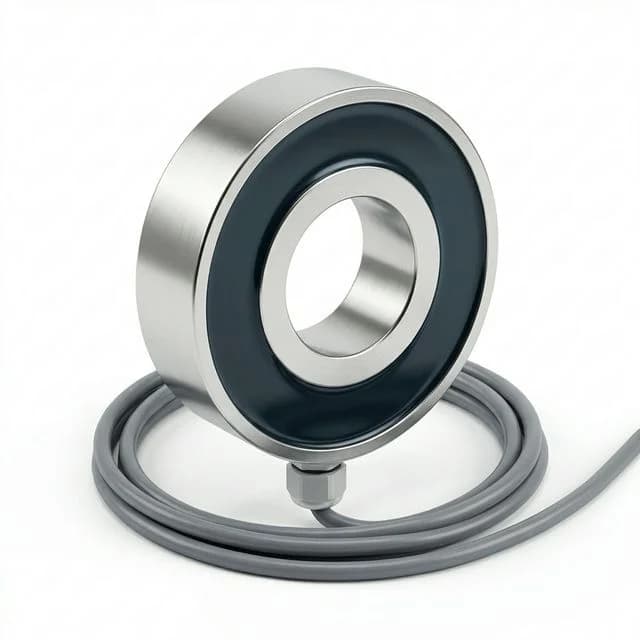
The Shift to 48V Solenoids in AGV/AMR: 12V vs 24V vs 48V Procurement Guide
Specify 48V solenoids and electromagnets for next-gen AGV/AMR platforms. Compare 12V, 24V, and 48V architectures, thermal efficiency, wiring weight, and costs.
One-Line Decision: For legacy robotic systems and small-scale automation, 24V remains the mature, cost-effective standard. However, if you are designing a new high-payload AGV, AMR, or humanoid robot platform for 2026 and beyond, specifying actuators for a 48V architecture is a practical way to reduce wire harness weight, minimize distribution losses, and stay below the 60V DC extra-low-voltage boundary used in many safety frameworks.
Need engineering support to transition your mechanical actuators to a 48V bus? Contact our engineering team for a thermal audit and redesign of your custom electromagnets and continuous-duty solenoids.
Published / updated: 2026-07-23. Scope: Buyer-side specification, engineering comparison, and procurement strategy for 12V, 24V, and 48V DC solenoids used in mobile robotics, Automated Guided Vehicles (AGV), Autonomous Mobile Robots (AMR), and automotive applications. Not covered: AC solenoids, high-voltage EV traction systems (400V/800V).
Quick Navigation
- Executive Summary: The 48V Tipping Point
- The Physics of the Shift: Ohm's Law and I²R Losses
- 12V vs 24V vs 48V: Solenoid Architecture Comparison
- Visualizing the Current Draw (SVG)
- The Safety Boundary: Why Stop at 48V?
- Manufacturing Reality: Winding a 48V Coil
- The Cost Cascade: Component vs. System Savings
- Sourcing and Engineering Checklist (2026)
- FAQ for Procurement & Engineering
- Sources and References
Executive Summary: The 48V Tipping Point
For decades, the industrial automation and mobile robotics sectors have standardized on 24V DC for logic and actuation, while the automotive sector remained stubbornly anchored to 12V DC. This started changing in the mid-2020s as automotive 48V supply standards matured and high-power-demand Autonomous Mobile Robots (AMRs) became common in logistics.
In 2026, the demand for payload capacity, battery endurance, and sensor integration on mobile platforms is at an all-time high. A modern AMR must power LIDAR, edge AI computers, traction motors, and multiple electromagnetic actuators (such as holding brakes, locking pins, and grippers). Running all of these on a 12V or 24V bus requires thick, heavy, inflexible copper wiring to handle the immense current draw.
The shift to a 48V power bus solves the weight and power delivery bottleneck. However, it forces procurement teams and mechanical engineers to requalify their entire Bill of Materials (BOM). You cannot simply drop a legacy 24V bistable solenoid into a 48V system without risking catastrophic thermal failure or requiring inefficient step-down converters. This guide provides the blueprint for sourcing 48V solenoids, comparing the real-world tradeoffs, and ensuring a seamless transition.
The Physics of the Shift: Ohm's Law and I²R Losses
To understand why 48V is becoming the gold standard, we must look at the fundamental physics of power transmission. Power (Watts) is the product of Voltage (V) and Current (I): P = V x I.
If a heavy-duty locking solenoid requires 120 Watts of power to generate the necessary magnetic pull force to actuate a locking pin on an AGV:
- At 12V, the coil draws 10 Amps (120W / 12V = 10A).
- At 24V, the coil draws 5 Amps (120W / 24V = 5A).
- At 48V, the coil draws 2.5 Amps (120W / 48V = 2.5A).
Why does a reduction in current matter? Because the heat generated (and therefore power wasted) in the wiring harness running from the battery to the solenoid is determined by Joule Heating, calculated as P_loss = I^2R.
Because the current (I) is squared in this equation, cutting the current in half (by doubling the voltage from 24V to 48V) reduces the heat lost in the wiring by 75%. Moving from 12V to 48V reduces the current by a factor of 4, cutting the heat loss in the wiring by a staggering 93.7%.
This massive reduction in current allows engineers to use significantly thinner gauge wire (e.g., dropping from 12 AWG to 18 AWG). In a complex AMR with dozens of actuators, this sheds pounds of dead weight, freeing up mass for higher battery capacity or active payload.
12V vs 24V vs 48V: Solenoid Architecture Comparison
When comparing these voltage platforms from a sourcing perspective, buyers must look beyond the coil itself and consider the ecosystem.
| Specification / Attribute | 12V DC Architecture | 24V DC Architecture | 48V DC Architecture |
|---|---|---|---|
| Typical Applications | Legacy automotive, consumer vehicles, small recreational robotics. | Standard industrial automation, standard AGVs, CNC machines, legacy warehouse robots. | Next-gen AMRs, humanoid robots, EV steering/braking, heavy-duty logistics automation. |
| Current Draw (for a 100W load) | High (8.33 Amps). Requires thick wire. | Moderate (4.16 Amps). The industry standard for decades. | Low (2.08 Amps). Allows for very thin, highly flexible wire harnesses. |
| Wiring Harness Weight | Heaviest. Thick copper required to prevent voltage drop over distance. | Baseline. Moderate weight and flexibility. | Lightest. Up to 75% reduction in copper cross-section compared to 12V. |
| Solenoid Coil Winding | Thick wire, fewer turns. Very fast to manufacture. High durability. | Medium wire, medium turns. Standardized manufacturing process. | Thin wire (e.g., 30-36 AWG), many turns. Slightly longer winding time; requires precise tension control. |
| Connector Size & Cost | Large, expensive high-current connectors required (e.g., large Anderson plugs). | Standard industrial M8/M12 connectors are usually sufficient. | Miniaturized connectors can be used, significantly reducing BOM cost and physical footprint. |
| Supplier Availability (2026) | Ubiquitous. Every manufacturer has 12V tooling. | Ubiquitous. The gold standard for industrial catalogs. | Growing rapidly. Most custom manufacturers can adapt, but off-the-shelf catalog options are still catching up. |
| Voltage Drop Sensitivity | Highly sensitive. A 1V drop over a long cable reduces power by 16%. | Moderately sensitive. | Very resilient. A 1V drop over a long cable has negligible impact on holding force. |
Visualizing the Current Draw (SVG)
This diagram illustrates the inverse relationship between system voltage and wire thickness requirements to power the exact same 120W mechanical load.
Wire Gauge Requirements for a 120W Solenoid Load
The Safety Boundary: Why Stop at 48V?
If increasing voltage reduces current and saves copper, why not jump straight to 120V or 200V DC?
The answer lies in international safety standards, specifically IEC 60364 and UL regulations regarding SELV (Safety Extra Low Voltage). SELV defines a system in which the voltage cannot exceed a value that is dangerous to human touch under normal conditions. For direct current (DC), the generally accepted SELV threshold is 60V DC.
By designing a nominal 48V system (which may peak around 54V-58V during battery charging), engineers stay safely below the 60V threshold. This means:
- No specialized shock-protection required: You do not need heavy, expensive orange high-voltage shielding on your cables.
- Simplified maintenance: Technicians can service the AGV/AMR without requiring high-voltage training, specialized insulated tools, or complex lockout/tagout procedures.
- Cheaper components: Relays, switches, and PCB traces do not need wide creepage and clearance gaps required for high-voltage isolation.
Going above 60V triggers massive regulatory, safety, and manufacturing compliance costs. Therefore, 48V represents the absolute sweet spot: the highest possible efficiency without triggering high-voltage safety penalties.
Manufacturing Reality: Winding a 48V Coil
From a procurement perspective, it is vital to understand how a 48V electromagnet is physically manufactured compared to a 12V or 24V variant.
To generate the same magnetic force at 48V, the coil requires a higher resistance to keep the current low. To achieve higher resistance in the same physical space, the manufacturer must use a thinner gauge of enameled copper magnet wire, and wind significantly more turns around the bobbin.
Manufacturing Challenges & Implications:
- Wire Fragility: Winding 34 AWG or 36 AWG wire at high speeds requires precision tension-control winding machines. If the supplier uses older equipment, the thin wire is prone to snapping, leading to high scrap rates.
- Fill Factor: Thinner wire has a slightly worse "fill factor" because a larger percentage of the cross-sectional area is taken up by the insulation enamel rather than the conductive copper. This requires careful bobbin design to ensure the required number of turns actually fits in the window.
- Insulation Breakdown: While 48V is safe for humans, inductive kickback (flyback voltage) when a 48V solenoid is turned off can easily spike to 300V-500V. The supplier must ensure the wire enamel and inter-layer insulation tape can withstand these transients without arcing.
The Cost Cascade: Component vs. System Savings
When auditing quotes for a new robot platform, buyers might notice that a custom 48V electromagnet costs 3% to 8% more than its 24V equivalent. This is due to the increased winding time and the cost of finer gauge copper wire.
However, rejecting 48V based on component-level piece-price is a critical error. The System-Level ROI is overwhelmingly positive:
- Wire Harness Savings: Copper is expensive and heavy. Reducing the wire harness gauge across 10 actuators on a robot saves significant BOM cost.
- Connector Downsizing: High-current connectors are notoriously expensive. Dropping the current allows the use of cheaper, smaller micro-fit connectors.
- Battery Management System (BMS) Efficiency: A 48V BMS runs cooler and more efficiently than a 24V system, extending the operational uptime of the AGV between charges.
- Driver PCB Costs: Mosfets and solid-state relays that switch 2.5 Amps are much cheaper and require less heat-sinking than those required to switch 10 Amps.
Sourcing and Engineering Checklist (2026)
Before authorizing the transition to 48V solenoids, execute this cross-functional checklist:
For Engineering Teams:
- Flyback Protection: Have we specified a flyback diode or TVS diode on the PCB or across the coil terminals? (48V coils generate higher voltage spikes when de-energized).
- Duty Cycle Mapping: Have we confirmed the duty cycle (e.g., 10%, 25%, Continuous)? 48V coils heat up just as fast as 24V coils if driven continuously.
- PWM Integration: Can we use a "Hit and Hold" PWM strategy (e.g., hit at 48V, hold at 12V effective) to further reduce thermal load?
- Connector Spec: Are the specified connectors rated for 48V DC? (Some legacy automotive connectors are strictly rated for 12V/24V and may arc over time at 48V).
For Procurement Teams:
- Tooling Impact: Does the supplier need new bobbins, or can they wind the 48V coil on existing 24V tooling? (Usually, existing tooling works fine).
- Lead Time Verification: Does the supplier stock the finer gauge wire required for the 48V coil, or will this introduce a supply chain delay?
- Supplier Quality (Winding): Does the supplier have automated, tension-controlled winding machines capable of handling fine wire without stretching or breaking it?
- Dielectric Testing: Has the supplier included a high-pot (dielectric withstand) test in the EOL (End of Line) quality plan to catch insulation weaknesses?
FAQ for Procurement & Engineering
Q: Can we run our existing 24V solenoids on a 48V bus using a step-down converter?
A: Yes, using a DC-DC buck converter is possible, but it adds cost, weight, and failure points to the robot. A better approach is to use a PWM driver to run the 24V coil directly off the 48V bus at a ~50% duty cycle. However, you must consult the coil manufacturer to ensure the wire insulation can handle the 48V peak transients. The best long-term solution is a native 48V coil.
Q: Does a 48V solenoid have more holding force than a 24V solenoid?
A: No. Magnetic holding force is determined by Ampere-turns (I x N) and the geometry of the iron core. A 48V coil achieves the same Ampere-turns by halving the current and doubling the number of turns. The physical force remains identical.
Q: Will 48V coils run cooler than 12V or 24V coils?
A: The coil itself will reach approximately the same steady-state temperature if the total wattage is identical. The thermal savings occur in the system wiring and driver electronics, not in the actuator core.
Q: Are 48V solenoids inherently more waterproof?
A: No. Voltage does not affect the Ingress Protection (IP) rating. You must still specify IP67 or IP69K potting (such as polyurethane encapsulation) if the AGV operates outdoors. See our IP67 vs IP69K Waterproof Coil Guide for details.
Sources and References
These references support the safety boundary, automotive 48V supply context, and electrical-loss model used in the procurement calculations above. They do not replace supplier qualification, coil thermal testing, or local compliance review.
- International Electrotechnical Commission (IEC). IEC 60364-4-41: Low-voltage electrical installations - Protection against electric shock. Used as the installation-safety context for SELV/PELV design decisions.
- ISO. ISO 21780:2020 - Road vehicles - Supply voltage of 48 V - Electrical requirements and tests. Defines requirements and tests for road-vehicle components operating on a nominal 48V DC electrical system.
- The Physics Hypertextbook. Electric Power. Reference for the
P = VI = I^2Rrelationships used to compare 12V, 24V, and 48V harness losses.
Author

Categories
More Posts
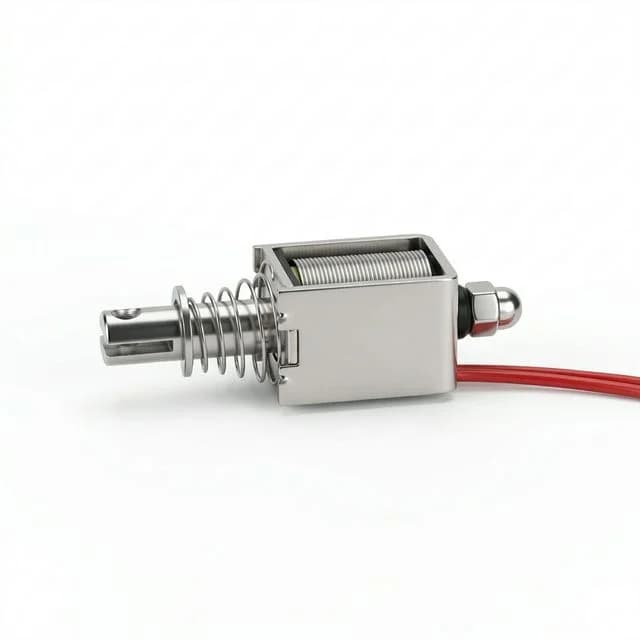
Electromagnetic Coil Duty Cycle (ED): The 2026 Thermal Management Guide for OEM Procurement
Specify solenoid duty cycles (ED%) to prevent thermal burnout. Learn VDE 0580, I²R heating, insulation classes, and hit-and-hold driver options for OEM buyers.
Bistable Latching Solenoids: Zero-Power Holding Guide for AGV/AMR Design
Specify bistable latching solenoids for 2026 battery-powered robotics. Compare monostable vs latching, driver circuits, thermal management, and TCO for AMRs.
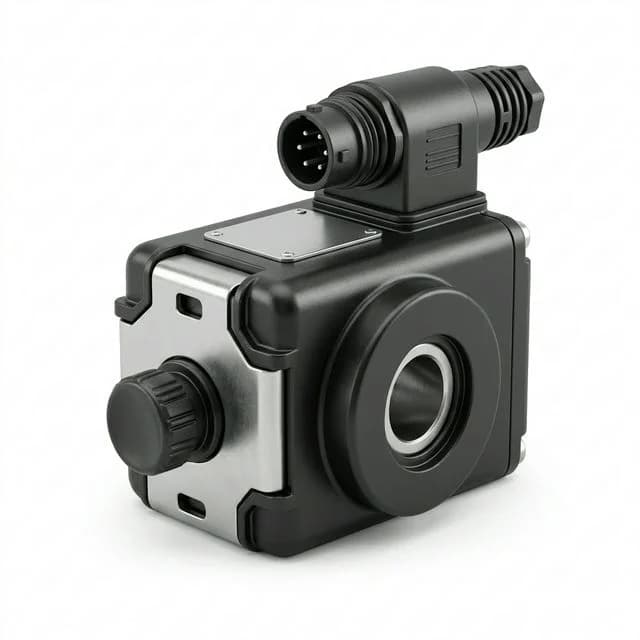
Electromagnet & Solenoid Market Update (2026-W16): NOES and 232
Decision update for OEM buyers: April 2026 NOES and Section 232 changes, EU GOES timeline, and the exact RFQ fields to update before the next PO cycle.