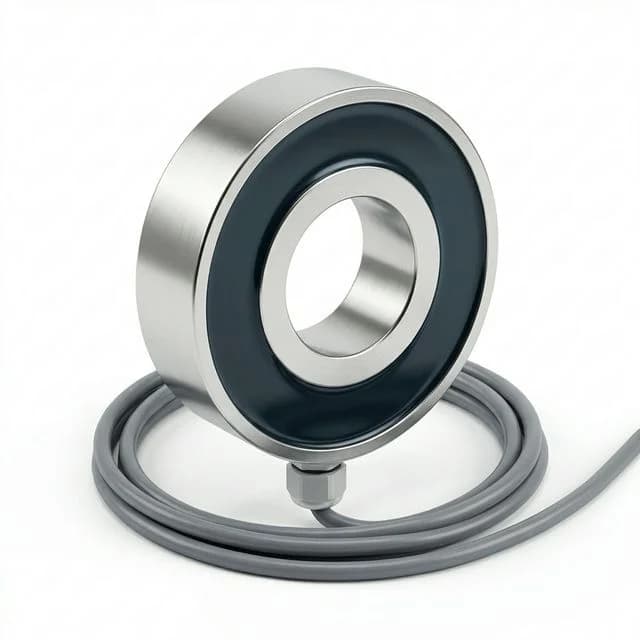
IP67 vs IP69K Waterproof Electromagnets: 2026 Procurement Guide to Coil Potting
Specify waterproof electromagnets for 2026 RFQs: compare IP67 vs IP69K, potting compounds, validation tests, cost tradeoffs, and supplier proof.
One-Line Decision: IP67 is sufficient for temporary submersion (e.g., outdoor rain exposure), but if your equipment undergoes high-pressure, high-temperature washdowns (like food processing or EV infrastructure), you must specify IP69K with Polyurethane or Silicone encapsulation—standard rigid Epoxies will crack under the thermal shock.
Need immediate design support for a harsh-environment coil? Contact our engineering team to align your duty-cycle and environmental requirements with a custom electromagnet or continuous-duty solenoid.
Published / updated: 2026-06-23. Scope: buyer-side specification for custom waterproof electromagnets, potted coils, and solenoid actuators used globally in outdoor, washdown, agricultural, marine, EV, and food-processing equipment. Not covered: explosion-proof approvals, medical-device validation, and final installed-machine safety certification.
Quick Navigation
- Executive Summary: The Over-Spec Trap
- Method and Evidence Boundaries
- IP67 vs IP69K: Testing Boundaries & Real-World Translation
- Potting Compounds: Epoxy vs. Polyurethane vs. Silicone
- Visualizing the Encapsulation Boundaries (SVG)
- Hidden Failure Modes in Waterproof Coils
- Supplier Validation & Quality Assurance Checklist
- Cost and Lead-Time Impact (2026 Baseline)
- FAQ for Procurement & Engineering
- Sources (Primary & Verifiable)
Executive Summary: The Over-Spec Trap
As automated equipment moves into increasingly harsh environments—from marine infrastructure to autonomous agriculture and food processing—procurement teams face a new challenge: correctly specifying waterproof electromagnets and solenoids without overpaying.
In the last 24 months, we have observed a trend where OEM engineers default to IP69K for any outdoor application. However, true IP69K manufacturing requires specialized vacuum-potted polyurethane or silicone encapsulation, overmolded connectors, and pressure-venting mechanisms. This can increase unit costs by 30% to 50% and extend lead times by 2-4 weeks compared to standard IP67 designs.
This guide provides the necessary decision framework to match the right Ingress Protection (IP) rating and potting compound to your actual operational boundary, preventing both premature field failures and unnecessary BOM inflation.
Method and Evidence Boundaries
This guide translates public enclosure-rating references and buyer-side manufacturing practice into an RFQ checklist. It is not a substitute for a certified lab report on your finished part number.
- Primary evidence used: IEC public IP-rating guidance, IEC 60529 standard reference, NEMA enclosure-type guidance, and material supplier technical notes on epoxy, polyurethane, and silicone potting.
- Commercial baseline: cost and lead-time multipliers are procurement planning ranges for custom potted coil builds reviewed in 2026; they should be re-quoted by voltage, coil size, cable exit, connector type, tooling, and test-lot quantity.
- Acceptance rule: do not approve a supplier claim such as "waterproof", "IP69K", or "NEMA 4X equivalent" unless the quote names the test standard, sample state, cable/connector configuration, and whether the rating applies to the potted coil only or the full actuator assembly.
IP67 vs IP69K: Testing Boundaries & Real-World Translation
Understanding the strict definitions of these standards prevents costly misapplications. Water ingress is the #1 cause of insulation breakdown and short circuits in electromagnetic coils.
| Rating | Published Test Boundary | What It Actually Means for Electromagnets | When to Specify |
|---|---|---|---|
| IP65 | IEC public guidance maps IP65 to dust-tight protection and water jets. | Can survive splashing water and heavy rain. Not submersible. | Standard outdoor automation, automatic gates, covered vehicle components. |
| IP67 | IEC 60529 defines temporary immersion; the common procurement boundary is up to 1 meter for 30 minutes. | Can survive temporary flooding. Cannot withstand pressurized sprays. | Agricultural machinery, marine deck equipment, underground valve manifolds. |
| IP68 | Continuous immersion beyond IP67; depth and duration must be specified by the manufacturer. | Designed for permanent underwater operation. Requires specialized cable glands and a named immersion condition. | Subsea robotics, pool equipment, deep-well pumps. |
| IP69K / IPX9 | IEC public guidance describes protection against high-pressure, high-temperature water jets; road-vehicle programs often cite ISO 20653 / legacy DIN 40050-9. | Resists aggressive thermal shock and washdown penetration. Does not automatically mean it is IP68 submersible. | Food & beverage processing, medical sanitation, meat packing, heavy mining equipment. |
Critical Caveat: IP ratings are not cumulative. An IP69K electromagnet is tested for high-pressure spray, but it might fail a 1-meter submersion test (IP67) if not specifically rated for both (e.g., IP67 / IP69K).
RFQ wording that prevents ambiguity: "Finished coil assembly shall pass IP67 temporary immersion and IP69K/IPX9 washdown in the supplied cable/connector state; supplier must identify test standard, sample quantity, report date, and any post-test dielectric/insulation-resistance acceptance limits."
Potting Compounds: Epoxy vs. Polyurethane vs. Silicone
The core of a waterproof electromagnet is its encapsulation—the process of filling the coil housing with a resin (potting) to exclude moisture and improve heat dissipation. The choice of polymer dictates the thermal, chemical, and mechanical survival of the actuator.
1. Epoxy Resins (The Rigid Standard)
- Characteristics: High hardness, excellent chemical resistance, high dielectric strength.
- Temperature Range: Up to 150°C (with specialized grades reaching 180°C).
- The Problem: Epoxy is rigid. If the copper coil heats up and expands during a continuous duty cycle, the Coefficient of Thermal Expansion (CTE) mismatch between the copper and the epoxy causes micro-cracks. Water enters through these cracks, leading to a short circuit.
- Best For: Indoor industrial environments, chemically aggressive but thermally stable environments.
- RFQ Gate: Accept epoxy for waterproof coils only when the supplier also proves thermal-cycle survival and adhesion to the housing/lead-exit system.
2. Polyurethane (The Flexible Workhorse)
- Characteristics: Flexible, excellent impact resistance, low glass transition temperature.
- Temperature Range: -40°C to 130°C (short excursions to 150°C).
- The Advantage: Polyurethane flexes with the copper coil during thermal cycling. It provides a superior moisture barrier over time because it doesn't crack under thermal shock. According to Epic Resins and CYCT New Materials, aliphatic polyurethanes are replacing epoxies in dynamic outdoor environments.
- Best For: IP67 and IP69K electromagnets, automotive applications, EV charging locks, high thermal-cycling environments.
- RFQ Gate: Ask for vacuum-potting process controls, mix-ratio control, cure schedule, and insulation-resistance data after thermal shock.
3. Silicone (The Extreme Temperature Shield)
- Characteristics: Extremely soft, highly repairable, unparalleled high/low temperature tolerance.
- Temperature Range: -60°C to 200°C+.
- The Drawback: Highest material cost. Lower mechanical strength against abrasion if the housing is breached.
- Best For: Aerospace, deep-freeze automation, extreme continuous-duty holding magnets.
- RFQ Gate: Use silicone when the temperature range or vibration risk beats the added material cost; protect it mechanically with housing design.
Visualizing the Encapsulation Boundaries (SVG)
To understand where water breaches an electromagnet, we must look at the cross-section of a potted coil. The interfaces—not the bulk material—are the weak points.
Failure Paths in Waterproof Electromagnet Encapsulation
Hidden Failure Modes in Waterproof Coils
- Wire Wicking (Capillary Action): Even if the housing is perfectly sealed, water can travel down the inside of the insulated lead wires—between the copper strands and the PVC/Teflon jacket. Solution: Specify blocked cables or individually overmolded lead wire transitions.
- The "Breathing" Effect: An electromagnet gets hot when activated. The internal air expands and pushes out. When deactivated, it cools, creating a vacuum that sucks in external moisture through microscopic pores. Solution: Vacuum potting removes trapped air bubbles, eliminating the breathing effect.
- Corrosion of the Armature Cavity: For solenoids with moving plungers, potting protects the coil, but the mechanical plunger cavity remains exposed. Solution: Plungers must be electroless nickel-plated or made of 400-series stainless steel, accompanied by a drain hole to prevent hydrostatic lock.
Supplier Validation & Quality Assurance Checklist
When shifting from a generic electromagnet supplier to a harsh-environment partner, procurement teams must audit the manufacturing process. Do not accept "IP69K" printed on a datasheet without process proof.
Use this checklist during your RFQ evaluation:
- Vacuum Potting Machine: Does the supplier use a vacuum chamber during resin dispensing? (Dispensing in open air traps bubbles, leading to high-voltage arcing and moisture traps).
- Resin Mixing Equipment: Are they using automated meter-mix dispensing systems for 2-part polyurethanes to ensure exact stoichiometry?
- Thermal Shock Testing: Do they provide internal test reports showing survival over 100+ cycles from -40°C to +85°C?
- IP Test Certificates: Can they provide a third-party laboratory certificate (e.g., SGS, TÜV) specifically confirming the part number passed the named IEC 60529, ISO 20653, or customer washdown/immersion condition?
- Wire Transition Sealing: How is the transition between the magnet wire and external lead wire sealed? (Look for integral overmolding rather than basic heat-shrink).
- Post-Test Electrical Acceptance: Does the report include insulation resistance, dielectric withstand, and functional force/stroke checks after water exposure?
If your RFQ already contains "waterproof", "IP67", or "IP69K" language but lacks test-state and cable-exit details, send the requirement for engineering review before locking the supplier shortlist.
Cost and Lead-Time Impact (2026 Baseline)
Moving up the IP scale alters the manufacturing process fundamentally. Here is how it impacts procurement planning:
Treat this as a 2026 budgeting range, not a supplier quote. Small prototype lots, custom connectors, stainless housings, and third-party lab reports can move the final number outside these bands.
| Specification | Relative Cost Multiplier | Lead-Time Impact | Tooling Cost |
|---|---|---|---|
| IP54 (Tape Wrapped) | 1.0x (Baseline) | Standard (4 weeks) | None |
| IP65 (Basic Epoxy Potted) | 1.1x to 1.2x | +1 week | Low (Standard cups) |
| IP67 (Vacuum Polyurethane) | 1.3x to 1.5x | +2 weeks | Medium |
| IP69K (Full Overmold + Purge) | 1.5x to 2.0x | +3 to 4 weeks | High (Custom injection mold tools) |
Procurement Recommendation: If tooling costs for true IP69K overmolding break your NRE budget, ask your supplier for a "potted cup with secondary mechanical gland" hybrid design. It often achieves IP67+ performance at a fraction of the tooling cost.
FAQ for Procurement & Engineering
Can I use an IP65 solenoid valve outdoors if it's under a cover?
Yes. If the component is shielded from direct high-pressure spray and standing water, IP65 is generally sufficient for ambient humidity and condensation.
Why did our epoxy-potted coils fail in the winter?
Epoxy is rigid and becomes brittle at sub-zero temperatures. The CTE mismatch between the expanding/contracting copper coil and the rigid epoxy causes micro-cracks. Moisture enters when the ice thaws. Switch to polyurethane potting.
Does potting affect the duty cycle or holding force?
Potting improves the duty cycle by acting as a thermal bridge, transferring heat from the copper wire to the steel housing faster than air. It does not negatively affect holding force unless the compound mechanically obstructs the armature.
Is IP69K the same as NEMA 4X?
No. NEMA guidance treats Type 4X as an installed enclosure protection class with additional corrosion protection. IP69K/IPX9 is focused on high-pressure, high-temperature water ingress. A stainless or coated part can be IP69K and still need separate corrosion evidence.
Can we pot the coils ourselves to save money?
Unless you have a dedicated vacuum-dispensing system and curing ovens, manual potting leads to trapped air voids, inconsistent mixing, and a high failure rate. It is always more cost-effective to buy pre-potted assemblies from the electromagnet manufacturer.
Sources (Primary & Verifiable)
| Source Description | Context / Verification | URL |
|---|---|---|
| IEC Ingress Protection (IP) Ratings Guide | Public IEC explanation of IP rating digits, including high-pressure/high-temperature water-jet protection. | IEC IP ratings guide |
| IEC 60529 Degrees of Protection | Standard reference for enclosure ingress-protection testing; use the purchased standard or lab report for final acceptance criteria. | IEC Standards |
| Polyurethane vs. Silicone Potting Compounds | Epic Resins technical bulletin detailing thermal cycling limits (-60°C to 150°C) and cost advantages of polyurethanes over silicones. | Epic Resins |
| Epoxy vs Polyurethane Characteristics | CYCT New Materials material science comparison highlighting epoxy's rigidity vs polyurethane's flexibility. | CYCT Materials |
| Choosing the Right Potting Material | Polymer-G engineering guide on CTE mismatch and thermal aging resistance in 2-component encapsulants. | Polymer-G |
| NEMA Enclosure Types | Official NEMA description of Type 4X enclosure protection, including hose-directed water and additional corrosion protection. | NEMA enclosure types PDF |
For more procurement insights and engineering specifications, browse our product guides, review custom electromagnets, or explore continuous-duty solenoids.
Author

Categories
More Posts
Q3 2026 Sourcing Alert: How New Copper & NOES Tariffs Impact Electromagnet Costs
Q3 2026 copper and NOES tariff changes affect electromagnet, solenoid, clutch, and holding magnet RFQs. Review cost, lead-time, and spec actions.
PFAS-Free Solenoids & Electromagnets: 2026 Procurement & Engineering Guide
Specify PFAS-free solenoids and electromagnets for 2026. Compare FKM/PTFE alternatives, thermal limits, compliance risks, and RFQ checklist before sourcing.
Electromagnet & Solenoid Market Update (2026-W15): Section 232 Full-Value Duties and EU GOES Safeguard Start
Buyer-facing update for OEM teams: what changed in U.S./EU trade signals, which magnetic product families are affected, and how to adjust RFQs for cost, lead time, and reliability risk.