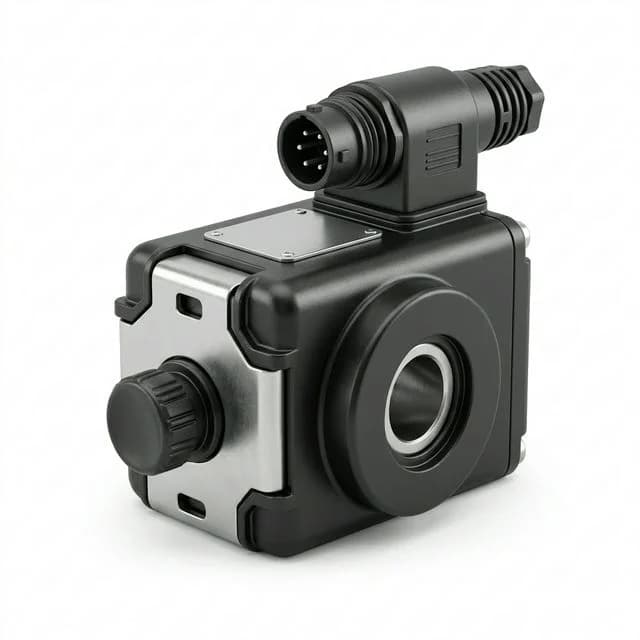
Q3 2026 Sourcing Alert: How New Copper & NOES Tariffs Impact Electromagnet Costs
Q3 2026 copper and NOES tariff changes affect electromagnet, solenoid, clutch, and holding magnet RFQs. Review cost, lead-time, and spec actions.
One-Line Decision: The mid-2026 U.S. trade policy updates regarding copper derivative articles and NOES are significantly driving up costs for import-dependent electromagnets and solenoids. OEM sourcing and engineering teams must immediately re-evaluate Q3/Q4 procurement, HTSUS classifications, and specification strategies.
The cost basis for custom magnetic actuators is undergoing a structural shift. With the core cost of electromagnets and solenoids heavily dependent on copper windings and silicon steel/electrical steel (NOES) magnetic cores, the latest U.S. federal trade adjustments disrupt existing OEM quoting paradigms.
Need a fast RFQ-control review before release? Start from custom electromagnets, compare cost exposure against electromagnet price drivers, then escalate unresolved tariff or specification gaps via contact engineering.
Quick Navigation
- Executive Summary for Buyers
- What Changed: Section 232 Copper & NOES Tariffs
- Cost Transmission Chain (SVG)
- Which Electromagnet / Solenoid Cases Are Affected
- Cost, Lead-Time, and Specification Impact
- Sourcing Route Comparison Table
- Sourcing Exposure Risk Map (SVG)
- Compliance Timeline and Critical Cutoffs
- Buyer Action Checklist (Who Should Act Now)
- Risks, Limits, and Boundaries
- FAQ
- Sources (Primary, Verifiable)
Executive Summary for Buyers
Window: Q3 2026
Target week: 2026-W27
- Copper Tariffs Overhaul: Proclamation 11021, published April 9, 2026, shifts Section 232 duties on covered aluminum, steel, and copper articles and derivatives to the full customs value of the imported product, regardless of metal content. Many covered copper articles default to a 25% additional duty.
- NOES AD/CVD Continuation: Federal Register notice
91 FR 28573(published May 18, 2026; effective May 13, 2026) confirmed the continuation of Antidumping and Countervailing Duty (AD/CVD) orders on Non-Oriented Electrical Steel (NOES) from multiple origins, sustaining a hard bottleneck for low-cost, high-permeability magnetic cores. - Documentation Thresholds: Reduced-rate treatment depends on the exact annex, HTSUS classification, and metal-origin documentation such as US smelt/cast for copper or US melt/pour for steel. Buyers now need supplier certificates at the RFQ stage, not after PO release.
What Changed: Section 232 Copper & NOES Tariffs
| Policy Update | Direct Material Target | Mechanism of Impact | OEM Implication |
|---|---|---|---|
| Section 232 Restructuring (April 2026) | Covered copper articles and derivative articles | Tariff assessed on full customs value instead of strictly metal content; many covered copper articles default to 25%. | Imported solenoid coils and copper-heavy magnetic subassemblies need landed-cost repricing before Q3/Q4 PO release. |
| 91 FR 28573 (May 2026) | Non-Oriented Electrical Steel (NOES) | Continuation of AD/CVD orders maintains import-duty exposure for specified origins. | Suppliers of custom electromagnets will pass on the premium paid for compliant domestic or allied-origin NOES. |
| Reduced-Rate / Documentation Rules | Completed actuators vs sub-assemblies | 15% / 10% / 0% outcomes depend on the applicable annex, Column 1 duty rate, origin, and smelt/cast or melt/pour documentation. | OEMs must verify HTSUS codes and material-origin certificates before accepting a supplier quote. |
Cost Transmission Chain
Which Electromagnet / Solenoid Cases Are Affected
The regulatory updates do not treat all magnetic devices equally. Exposure depends heavily on the integration level of the imported product.
| Product Category | Exposure Level | Application Impact |
|---|---|---|
| Custom DC Electromagnets (High-Volume) | Severe | These are highly sensitive to raw material costs. Off-shore mass production of custom wound coils faces the full 25% downstream copper tariff. |
| Electromagnetic Clutches & Brakes | High | Heavy reliance on specific NOES laminations and dense copper packaging. Disruption in NOES supply chains will extend lead times. |
| Finished Industrial Solenoid Valves | Moderate | Some finished assemblies may land in a lower-rate pathway, but only if the exact HTSUS classification and annex treatment support it. |
| Domestic / US-Metal-Documented Magnets | Low to Moderate | Devices with verified US-smelted/cast copper or US-melted/poured steel content may reduce Section 232 exposure, but buyers still need SKU-level customs review. |
Cost, Lead-Time, and Specification Impact
The downstream effect of these tariffs forces a re-evaluation across commercial and engineering vectors:
1. Cost & Lead-Time Reality
- Landed Cost Spikes: Importers relying on offshore winding facilities will see landed costs increase abruptly as tariffs apply to the entire customs value, not just the copper weight.
- Lead-Time Extensions: Overseas suppliers are already restructuring their supply chains to navigate NOES AD/CVD constraints, leading to unpredictable MOQ changes and delivery delays.
2. Specification Impact (The "Aluminum Fallacy")
In response to copper tariffs, some sourcing teams push to substitute copper windings with aluminum to cut costs. For electromagnets and solenoids, this is a dangerous engineering compromise:
- Volume Penalty: Aluminum has roughly 60% of the conductivity of copper. Achieving the same Ampere-turns (holding force) requires a significantly larger coil volume.
- Thermal Hazards: Aluminum coils exhibit higher temperature rises (I²R losses) under the same voltage, stressing insulation and shortening the duty cycle limits.
- IP / Enclosure Limitations: A larger coil means a redesigned housing, which complicates IP67/IP69K sealing requirements and voids existing form-factor drop-ins.
Do not approve a material substitution without full thermal and duty-cycle requalification.
Sourcing Route Comparison Table
| Sourcing Route | Estimated Tariff / Duty | Lead-Time Risk | Engineering Change Risk | Best For |
|---|---|---|---|---|
| Legacy Offshore Import (Components) | 25% (Full Value) | High (Supply chain pivoting) | Low (If NOES is secured) | Legacy programs with zero redesign budget, accepting higher landed costs. |
| Offshore Import (Potential Lower-Rate Finished Assembly) | 15% target, subject to review | Medium (Customs scrutiny) | Low | Complete valve or clutch assemblies with clear HTSUS rulings and no unresolved annex conflict. |
| Localized / US-Metal-Documented Sourcing | 10% / 0% pathway, subject to annex and origin proof | Low | Medium (Requires re-validation of local cores) | New designs, defense, and high-reliability industrial automation. |
Sourcing Exposure Risk Map
Compliance Timeline and Critical Cutoffs
Managing the transition requires tracking three distinct regulatory trigger dates. Any active RFQs or blanket POs extending across these dates require immediate cost repricing.
| Regulatory Event | Effective Date | Expiration / Duration | Buyer Action Threshold & Immediate Impact |
|---|---|---|---|
| Proclamation 11021 | April 6, 2026 | Indefinite | Any covered custom coils or copper-heavy magnetic components entered for consumption on or after April 6 must be re-costed for full-customs-value Section 232 exposure. |
| NOES AD/CVD Continuation | May 13, 2026 | Indefinite (5-Year Review) | Audit Tier-2 core suppliers immediately. Specifically targets China, Germany, Japan, South Korea, Sweden, and Taiwan. |
| Temporary Annex III Treatment | April 6, 2026 | Valid through Dec 31, 2027 | Secure copper smelt/cast and steel melt/pour certificates from suppliers before Q4 2026 production runs. |
Buyer Action Checklist (Who Should Act Now)
Sourcing & Procurement Teams
- Audit the BOMI: Immediately review the Bill of Materials for all imported custom electromagnets and solenoids.
- Verify HTSUS Codes: Do not rely on 2025 customs rulings. Check if your subassemblies fall under the Section 232 25% derivative umbrella, or if a lower-rate pathway applies to the exact finished assembly.
- Collect Origin Certificates: Request copper smelt/cast and steel melt/pour documentation with the RFQ, plus NOES mill country and grade traceability.
- Add Quote Validity Language: Require suppliers to separate material, duty, freight, and tooling deltas so tariff-driven price changes do not get hidden inside one blended unit price.
OEM Engineering Leads
- Optimize Duty Cycles: Review application requirements. Can the duty cycle be reduced? Less continuous-on time means a smaller coil is permissible, reducing the absolute volume of copper required without switching to aluminum.
- Hold the Line on Specs: Veto any "cost-saving" supplier proposals that switch copper for aluminum without a rigorous review of holding force, thermal rise, and spatial envelope constraints.
- Freeze Buyer-Facing Specification Deltas: Update RFQs to state coil material, NOES grade or permeability target, duty cycle, max winding temperature, insulation class, ingress rating, and whether the imported item is a coil, subassembly, or finished actuator. These fields determine whether a tariff response is a sourcing action or a redesign action.
Risks, Limits, and Boundaries
| Risk Area | Boundary Definition | Required Action |
|---|---|---|
| Legal/Customs Advice | This document provides engineering and sourcing context, not legal or customs compliance advice. | Consult a licensed customs broker to determine the exact HTSUS classification for your specific SKUs. |
| Scope Limitation | The impacts described apply specifically to custom electromagnets, holding magnets, electromagnetic clutches, and solenoids. | Do not generalize these rules to all AC motors, transformers, or generic automation drives which have different HTS pathways. |
| NOES Country Boundaries | AD/CVD orders on NOES restrict supply specifically from China, Germany, Japan, South Korea, Sweden, and Taiwan. | Map your Tier-2 NOES sources. Mills in regions outside these six nations offer an alternative, though global capacity remains tight. |
| Duration Constraints | Temporary Annex III treatment runs through December 31, 2027 for specified products, while other Section 232 and AD/CVD obligations remain SKU-specific. | Do not build long-term (2028+) supply contracts relying solely on a temporary reduced-rate pathway without contingency clauses. |
FAQ
Why are electromagnets hit harder than other components?
Electromagnets and solenoids are incredibly material-dense relative to their value. Their performance dictates a high ratio of copper (for the coil) and high-grade electrical steel (NOES, for the magnetic circuit). Tariffs targeting these exact materials have a disproportionate impact on the final BOM cost.
Can we just reclassify our imported coils as finished equipment?
Reclassifying a raw wound coil as finished industrial equipment to chase a lower rate is subject to strict customs scrutiny. The assembly must typically perform a discrete mechanical actuation function, such as a complete solenoid valve, rather than just being a magnetic component.
Does US-origin metal documentation solve the NOES problem?
Partially. US smelt/cast or melt/pour documentation can support reduced Section 232 exposure for qualifying metal content, but it does not erase NOES AD/CVD orders or domestic NOES capacity constraints.
Is aluminum wire ever an acceptable substitute for solenoids?
Only in applications with extreme weight sensitivity, highly intermittent duty cycles, and unconstrained spatial envelopes. For 95% of dense industrial holding magnets and actuators, aluminum's thermal and volume penalties make it unviable.
Sources (Primary, Verifiable)
| Title | Institution | Date | URL |
|---|---|---|---|
Strengthening Actions Taken To Adjust Imports of Aluminum, Steel, and Copper Into the United States (91 FR 18201, Proclamation 11021) | Executive Office of the President / Federal Register | April 9, 2026 | https://www.federalregister.gov/documents/2026/04/09/2026-06960/strengthening-actions-taken-to-adjust-imports-of-aluminum-steel-and-copper-into-the-united-states |
Non-Oriented Electrical Steel From Sweden, Germany, the People's Republic of China, the Republic of Korea, Taiwan and Japan: Continuation of Antidumping Duty Orders and Countervailing Duty Orders (91 FR 28573) | U.S. Department of Commerce / Federal Register | May 18, 2026 | https://www.federalregister.gov/documents/2026/05/18/2026-09826/non-oriented-electrical-steel-from-sweden-germany-the-peoples-republic-of-china-the-republic-of |
Need a buyer-side review on your active RFQs in light of these changes? Contact engineering. For related technical scope checks, review custom electromagnets, electromagnetic clutch, holding electromagnets, and solenoid valve quote requests. For more market-tracking posts, browse the News category.
Autor

Categorías
Más artículos
The Shift to 48V Solenoids in AGV/AMR: 12V vs 24V vs 48V Procurement Guide
Specify 48V solenoids and electromagnets for next-gen AGV/AMR platforms. Compare 12V, 24V, and 48V architectures, thermal efficiency, wiring weight, and costs.
Electromagnet & Solenoid Update (2026-W18): HTS Buyer Gates
OEM buyer update for April 29, 2026: HTS technical corrections, exposed electromagnet/solenoid sourcing paths, and this week's RFQ + customs control gates.
Electromagnet & Solenoid Market Update (2026-W15): Section 232 Full-Value Duties and EU GOES Safeguard Start
Buyer-facing update for OEM teams: what changed in U.S./EU trade signals, which magnetic product families are affected, and how to adjust RFQs for cost, lead time, and reliability risk.