Electromagnetic brake and 24VDC electromagnetic brake fit checker for 12V and 24V RFQs
If you searched for 12v electromagnetic brake or 24vdc electromagnetic brake, the real approval question is not keyword match. It is whether torque margin survives voltage variation, switching delay, thermal duty, and evidence quality. This page gives you the checker first, then the numbers, boundaries, and risks.
Alias intent note: 12v electromagnetic brake and 24vdc electromagnetic brake are merged into this canonical route /learn/electromagnetic-brake. No separate alias page is published, so the tool model and trust evidence remain consistent.
Alias Coverage
24vdc electromagnetic brake is handled on this canonical URL
A 24VDC, 24V or 24 volt electromagnetic brake query usually means the user has a supply or catalog voltage constraint, not a separate information architecture problem. The same tool checks torque, voltage ratio, switching path, thermal duty, and evidence quality in one place.
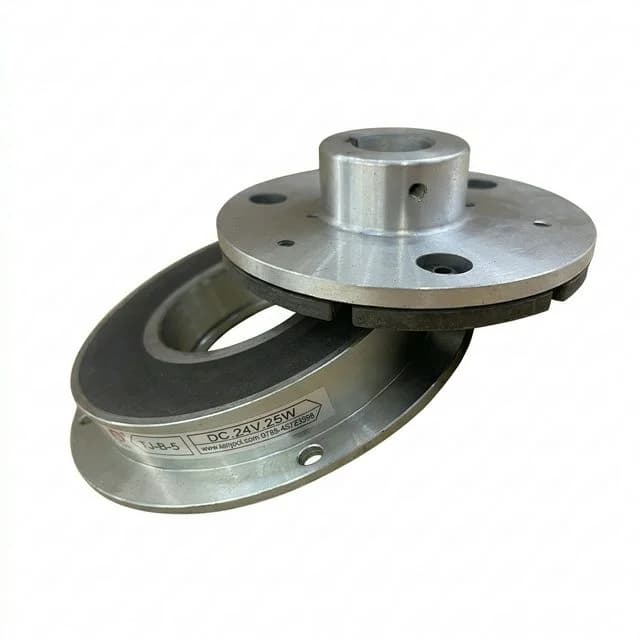

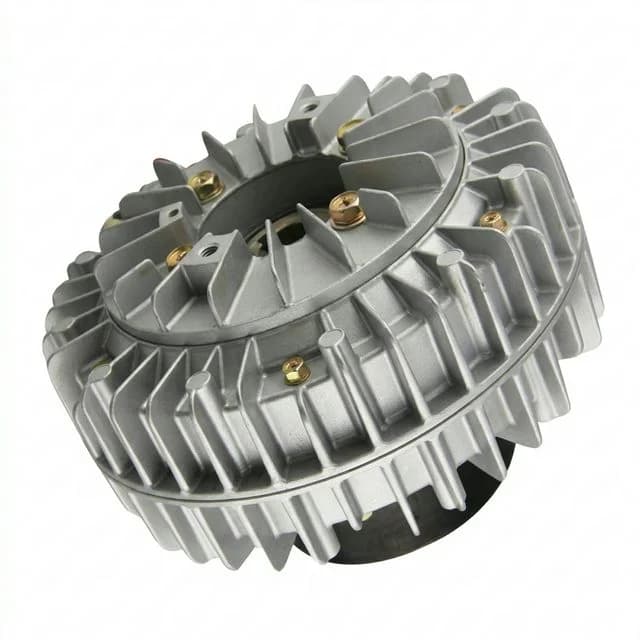
Summary
Core conclusions, key numbers, and audience fit
The quick summary below supports immediate 12V and 24 volt screening intent plus deeper technical decision validation.
Method
How the tool computes and interprets fit
Method transparency is included on-page so buyers can audit assumptions, not just accept a label.
Evidence
Data sources, known values, and boundary limits
Each core conclusion is tied to a public source, date context, and an explicit limit statement to avoid overclaiming. Research refresh timestamp: July 24, 2026.
- Manufacturer flyerDocument date: 10/2018Lenze spring-applied brakes flyer (BFK457/BFK458)
Lists BFK457/BFK458 torque ranges and voltage classes used for first-pass frame screening.
- Manufacturer operating manualRevision: 01/2024INTORQ BFK468 operating instructions (Lenze host)
Publishes friction-work and operating-time tables and records a 01/2024 revision that reduced permissible friction work.
- Manufacturer datasheetRevision: 01/2025Mönninghoff Type 558 datasheet
Confirms 24 Vdc standard, special voltage window, and explicit permissible voltage tolerance.
- Manufacturer technical method pageAccessed: April 22, 2026KEB dimensioning and calculations of brakes
States dynamic torque and emergency-stop friction-work boundaries, plus run-in effects on rated torque.
- Manufacturer product page + linked docsCatalog date visible: 29.10.2025; techinfo date visible: 07.01.2026KEB COMBINORM B electromagnetic brake page
Counterexample architecture: operating-current brake opens on power loss, with 24V standard and custom voltage options.
- Manufacturer taxonomy/reference pageAccessed: April 22, 2026mayr brake systems glossary
Defines spring-applied fail-safe brakes vs energise-to-engage brakes and marks safety-class boundary.
- Standards text (public copy)Edition: 2004IS/IEC 60034-1:2004 rotating machines (public copy)
Provides Zone A/Zone B voltage/frequency operating variation framework for drive-system context.
- Standards textReviewed: June 23, 2026IEC 61140 Protection against electric shock
Defines SELV (Separated Extra-Low Voltage) and PELV (Protective Extra-Low Voltage) protective measures; a 24VDC brake branch still needs a compliant supply architecture before shock-protection claims are made.
- PLC I/O manufacturer sourceReviewed: June 23, 2026Rockwell Automation POINT I/O modules
Official manufacturer product page listing 24V DC POINT I/O module branches, supporting the claim that 24VDC brake coils align with common PLC/control I/O ecosystems.
- Manufacturer product documentationReviewed: July 24, 2026mayr ROBA-switch 24V supply and monitoring component
Lists 24VDC input, overexcitation, power reduction, integrated DC-side disconnection, and automatic switch-over from overexcitation voltage to holding voltage.
- Manufacturer product documentationReviewed: July 24, 2026KEB COMBITRON 98 rapid-switching rectifier
Demonstrates DC-side switching and overexcitation energy savings up to 94%; highlights that raw voltage is only part of the thermal/switching equation.
- Industrial brake module manufacturer sourceReviewed: July 24, 2026Kendrion rectifiers and electronic modules
Shows overexcitation rectifiers with fast turn-on, fast turn-off, fast shutdown, limited inductive turn-off voltage, and energy savings up to 75%.
- Legacy model-family manualPublication marker: June 2006INTORQ BFK458 operating instructions (legacy RS-hosted copy)
Provides legacy AC-side engagement warning (3-6x) and DC-side hoist wiring caution for older BFK458 family docs.
- Electrical machinery standard listing2024 edition; reviewed: June 4, 2026NFPA 79-2024 Electrical Standard for Industrial Machinery
Defines the industrial-machinery electrical-safeguard context; useful boundary: 24V control architecture is not a substitute for brake, guarding, and stop-function validation.
- Regulatory / safety agencyOSHA page reviewed: June 4, 2026OSHA machine guarding standards / 29 CFR 1910.212
Provides the US workplace-safety boundary for hazards from rotating parts, point of operation, nip points, and related machine motion.
- Regulatory / safety agencyOSHA regulation reviewed: June 4, 2026OSHA 29 CFR 1910.147 control of hazardous energy
Requires hazardous-energy control procedures for servicing and maintenance; reinforces that brake selection does not close maintenance-safety duties.
- Manufacturer catalogLegacy catalog; reviewed: June 4, 2026Warner Electric P-1234-WE electromagnetic clutches and brakes catalog
Adds another manufacturer sample where electrically released brakes list 24 VDC current/resistance values and 24 DC as standard for the ordering branch.
- Manufacturer literature indexCatalog library reviewed: June 4, 2026Warner Electric current catalog library
Shows current Warner catalog navigation and that older P-1234-WE content is marked obsolete; use legacy values only as evidence that 24V branches are common, not as current-release proof.
Known Unknowns
Pending confirmation and public-data limits
If evidence is insufficient, this page records it explicitly instead of forcing weak conclusions. Status timestamp: July 24, 2026.
Comparison
Architecture comparison and tradeoff table
Alternatives are compared on decision-relevant dimensions so the user can choose a next direction, not just read generic descriptions.
Risk
Risk matrix and mitigation path
This section covers misuse risk, cost risk, and scenario mismatch risk with executable mitigation actions.
Scenarios
Applied examples with premise, process, and outcome
Scenario demonstrations are included so teams can map this method onto real project conditions.
Stage1b
Research-enhancement gap audit
This section records what was missing after primary build and what was added in the second pass.
FAQ
Electromagnetic brake decision FAQ
Grouped by decision intent so answers remain actionable, not glossary-only.